The Kettle Is the Foreman: Inside the Quiet Brilliance of Britain’s Men’s Sheds
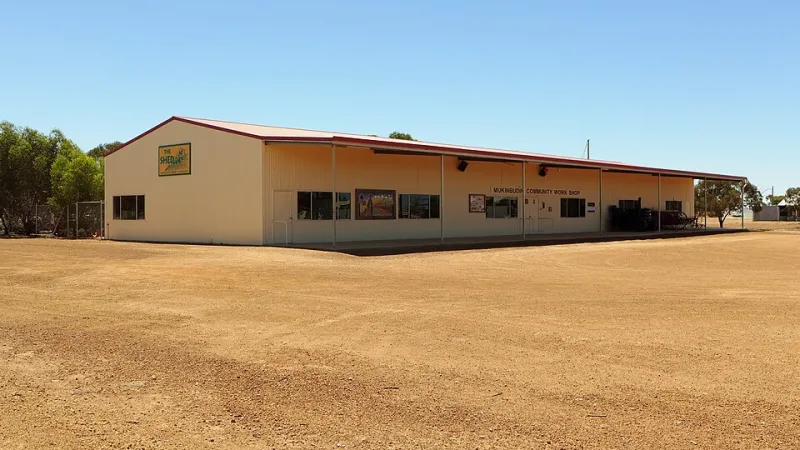
Photo: Bahnfrend, CC BY-SA 4.0, via Wikimedia Commons
There is a particular smell to a men’s shed. Sawdust, yes. Slightly overheated kettle, definitely. A faint whiff of a biscuit tin that has been open since roughly Tuesday. And underneath it all, that lovely oily hum of tools that have been kept going far longer than their manufacturers intended.
On a damp Thursday morning in Stockport, the door to a converted railway storage unit is already open. Inside, four men are standing around a workbench looking at a piece of plywood with the intense concentration usually reserved for a VAR decision. Nobody is actually touching the plywood. This, I am told, is part of the process.
“We’re thinking about it,” says Ray, 71, a retired maths teacher who now describes himself as “semi-professional measurer”. “You can’t rush a birdhouse. It knows if you’re rushing.”
First rule: the biscuit tin is load-bearing
Men’s sheds have been quietly popping up across the UK for years now, and in 2026 they are less a niche hobbyist thing and more a proper fixture of local life. The idea is simple: a workshop, a kettle, a few blokes, and no pressure to be anything other than useful. Some sheds are in village halls. Some are in old garages, scout huts, industrial units, even a former chapel. The tools vary. The welcome is usually the same.
At the Stockport shed, the biscuits are stacked beside a mug that says WORLD’S OKAYEST GRANDAD. There is a rota on the wall for tea. There is also a rota for “putting the chairs out”, which seems ambitious given that most of the chairs are already out and nobody is sitting on them.
“We’re not a club,” says Ray, slightly defensively. “We’re just a load of blokes who happen to be here at the same time. Every week. For three years.”
“I’m not a joiner, I just turn up”
Drive east to a shed in Norwich and the scene is similar but louder. This one shares a yard with a tyre place, and the soundtrack is a radio permanently tuned to a local station that plays equal parts Bon Jovi and agricultural news. Dave, a former electrician, is attempting to teach two others how to use a scroll saw. The lesson lasts four minutes before it becomes a conversation about whether the phrase “load-bearing” has gone too far in modern life.
“I’m not a joiner,” says Martin, 68, sanding a piece of wood with the gentle persistence of a man who has nowhere else to be. “I was a bank manager for thirty-five years. I can’t make a chair. But I can make a mess, and I can make a cup of tea, and apparently that’s enough to get a seat at the table.”
That is the quiet genius of the shed. It does not demand expertise. It does not demand a life story. It just asks that you turn up, and maybe don’t put the chisels back in the wrong drawer. The men I meet are retired teachers, ex-tradies, former lorry drivers, a one-time tax inspector, and a man called Pete who refuses to say what he used to do and instead describes himself as “between projects since 2011”.
The quiet business of talking sideways
Ask anyone who runs a shed what it is really for, and they will usually start with the woodwork. Then they will pause. Then they will say something like: “Well. It’s the company, isn’t it?”
The company is not the kind that requires eye contact or deep emotional disclosure. It is the kind that happens while someone is holding a piece of sandpaper and someone else is pretending to look for a screwdriver. It is talking sideways. It is grief without the word grief. It is a man saying “my wife’s been poorly” and another man saying “right, I’ll put the kettle on” and that being the whole conversation.
In Swansea, a shed tucked behind a community centre has a rule that nobody has to talk about why they are there. The shed leader, Alan, a retired joiner with hands like old cricket bats, says the first few weeks can be awkward. “They come in, they sit, they don’t say much. Then one day they make something. A shelf. A pencil pot. And they realise nobody is judging it. That’s when they relax.”
He shows me a row of birdhouses on a shelf. Some are straight. Some lean. One has a roof that looks like it has been fitted during a mild earthquake. “That one’s mine,” he says, proudly. “It’s rubbish. But it’s my rubbish.”
Why 2026 has made them matter more
It would be easy to be cynical about sheds. They are, after all, just rooms with tools and men in them. But in 2026, when so much local life happens through a screen and so many community spaces are fighting for funding, the shed feels quietly radical. It is cheap. It is low-tech. It is not trying to be anything other than a place to go.
And the need is real. Retirement can be a cliff edge for men, particularly those whose social life was tied up with work. Loneliness doesn’t always look like a man sitting alone in a dark room. Sometimes it looks like a man with a diary full of nothing, standing in a fully lit kitchen at 10am, wondering what to do with the day.
The sheds I visit don’t claim to solve that. They just offer a chair, a brew, and a reason to leave the house. “It gets you out,” says Pete, the between-projects man. “You don’t have to be cheerful. You don’t have to be good at anything. You just have to be here.”
The birdhouse that never quite gets finished
Back in Stockport, the plywood is still on the bench. It has been measured twice more and discussed at length. Ray has now made a small pencil mark on it, which feels like progress. The kettle clicks off. Somebody says “right then” and nobody moves.
By the door, a shelf holds a row of half-finished projects: a birdhouse with no roof, a small wooden aeroplane, a coat hook that is definitely wonky. They are not failures. They are proof of something. Proof of a Thursday morning spent in good company, making something that doesn’t really matter and somehow matters quite a lot.
“Same time next week?” I ask, as I leave.
Ray looks at me as if I have asked whether the sun will come up. “Aye,” he says. “The kettle’s already on.”
For anyone thinking of going along, the advice from every shed is the same: just turn up. You don’t need to be good with your hands. You don’t need to talk. You don’t even need to like birdhouses. You just need to be alright with the possibility of being handed a biscuit and asked a question that isn’t really a question at all.