Mud, Mugs and the Polite Lowball: A Sunday With Britain’s Boot Sale Believers
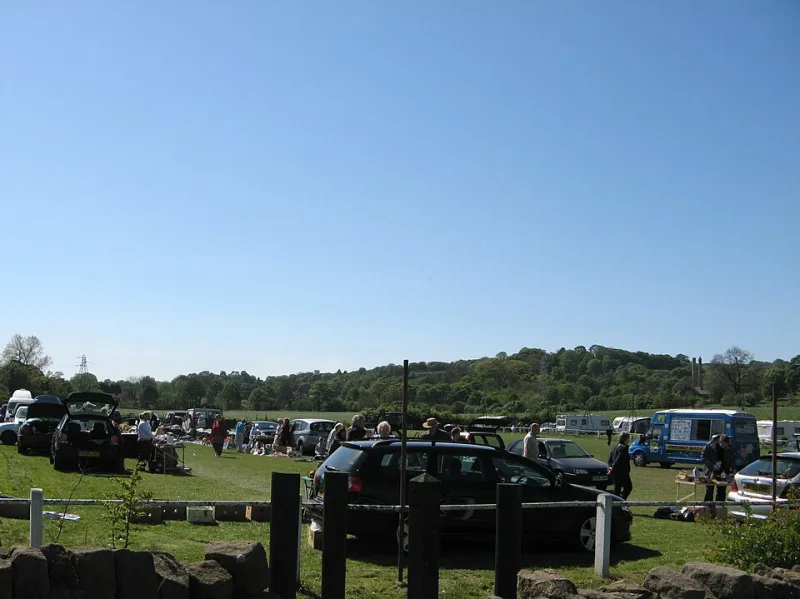
Photo: Stephen Armstrong , CC BY-SA 2.0, via Wikimedia Commons
There is a particular kind of British morning that begins in a field, in the dark, with a flask and a torch. The rest of the country is still arguing with the snooze button. The boot sale regulars are already three rows deep in other people’s cast-offs, doing that slow, expert scan that looks like browsing but is actually a form of audit.
I spent a Sunday in November at three very different sales — a rugby club field in the Midlands, a racecourse car park on the Kent coast, and an indoor former bus depot in Sheffield — to find out what makes the weekly ritual tick. The answer, as ever, involves mud, mugs, a bit of cheek and a bacon butty.
6:10am: The Torchlight Economy
At the rugby club, the first cars arrive before the floodlights have warmed up. Boots open with a clunk. Torches sweep across boxes of crockery, power tools, single roller skates and the occasional mysterious lead that definitely belonged to something. A man called Dave has been selling here for so long that he describes his stock as ‘things that were once useful to someone, now available to someone else’. He is leaning on a folding table with the calm of a man who has seen every kind of Sunday.
‘The early ones don’t browse,’ he says. ‘They audit. They know what they’re looking for, and they know what it’s worth. If they ask you a question before seven, it’s not a question. It’s a test.’
Margaret, two stalls down, is here for jugs. Not any jugs. ‘Creamware, mostly. But I’ll look at anything with a decent handle.’ She has a supermarket bag for life that is already clinking. ‘My husband says we’ve got enough jugs. I say you can never have enough jugs. We’re at an impasse.’
The Polite Lowball, Explained
The first rule of boot sale haggling is that it is not really about money. It is about performance. The seller knows the item is not worth the sticker. The buyer knows the seller knows. Both parties are simply enjoying the dance.
A polite lowball goes like this. You pick up the thing. You turn it over. You do not say, ‘That’s rubbish.’ You say, ‘Would you take three for the lot?’ The seller says, ‘I’ll do four and throw in the tea.’ You say, ‘Go on then.’ Everybody wins, including the person behind you who has been listening in and now wants a go.
What you must not do is grab, block the table, or offer a tenner on a twelve-pound item before 7am with the confidence of a man who has never been told no. Etiquette matters. Ask before you pick up. Do not say ‘I’ll be back’ unless you mean it. And if someone says ‘that’s my best price’, respect it — even if you suspect it is not, strictly speaking, true.
The Weird and the Wonderful
Every boot sale has a table that looks like a dream someone had after eating too much cheese. I saw a single roller skate, a box of commemorative spoons, a Toby jug with a chipped hat, a VHS box set of a documentary about canals, and a traffic cone with a face drawn on it in marker pen. One man was selling a spare wheel to a bloke who did not own a car. ‘He said it would make a good table,’ the seller shrugged. ‘I said fair enough.’
That is the philosophy in miniature. Value is a story you agree to tell each other. The best find is rarely the most expensive thing. It is the thing you did not know you needed until you saw it on a pasting table at 7:45am.
8:30am: The Bacon Butty Parliament
By the time I reach the racecourse, the wind is doing its best to remove my hat and the breakfast van is doing a roaring trade. This is where the real business happens. The queue for a bacon butty is a parliament. You learn more in eight minutes of bacon-related small talk than in most networking events.
White bread. Butter. Ketchup or brown. No rocket, no sourdough, no discussion. The tea is strong enough to stand a spoon in. The woman serving has the efficient warmth of someone who has heard every joke about ‘one rasher or two’ and has chosen to rise above it.
‘You can tell how good a boot sale is by the bacon queue,’ says a man called Colin, who is holding two butties and a tea. ‘If the queue’s long, the stalls are good. If the queue’s short, everyone’s already spent their money.’
10am: The Indoor Regulars
Sheffield’s indoor sale is a different breed. Younger crowd, more vintage, more resellers with phone cameras and a practised look of mild interest. The haggling is quieter but still there. ‘What’s your best on this?’ is the opening move. The walk-away is the closing move. The bundle — three items, one price — is the friendly middle.
What stays the same is the relationship. The regulars know which stall has the good tools, which one has the boxes you need to dig through, and which one is just there for the chat. The bacon van is indoors, but the smell is the same. It anchors the whole room.
What the Boot Sale Philosophers Know
Spend a few hours among the stallholders and you start to notice a certain wisdom. They know that patience pays better than urgency. That most things are replaceable. That a bargain is really just a story you get to tell later. That good chat is free, and often worth more than the thing you came for.
They also know the unwritten rules: bring cash, bring small notes, ask before you touch, don’t be rude about the goods, and never underestimate the social power of a shared bench and a paper napkin. The boot sale is a weekly reminder that most of us own too much and need less than we think — and that a decent bacon butty can make a cold morning feel like a good idea.
By half twelve, the stalls are packing up. Dave is counting fivers into a tin. Margaret has a jug and a look of quiet triumph. The breakfast van is closing. ‘Same time next Sunday?’ I ask. ‘Weather permitting,’ says Colin. ‘And even if it isn’t.’