The Friday Night Wire: What the Chip Shop Queue Knows Before Anyone Else
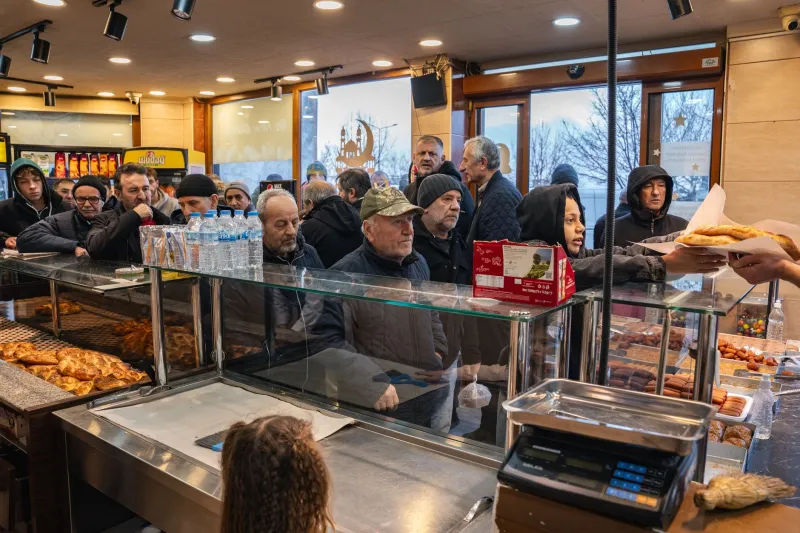
In 2026, local news can reach you in a hundred ways: a phone alert, a Facebook group, a neighbour waving a envelope over the fence. But none of it arrives with quite the same reliability as the chip shop queue. By the time the local paper has gone to print, the chippy has already had the argument, heard the apology, sold the congratulatory battered sausage and quietly paid for somebody else's tea.
The Queue Is the Front Page
At 6.18pm on a Friday, the queue at a chip shop on the edge of a Midlands estate is four deep and moving slowly on purpose. Behind the counter, Bev has been running the fryer for 19 years. She can tell you more about the street than the electoral roll. She just will not tell you all of it.
'You learn the rhythm,' she says, shaking a basket of chips. 'There's the ones who come in early because they've got the kids. The ones who come late because they've been working. The ones who come in on a Tuesday, which tells you something has changed. I'm not nosy. I'm just at the counter.'
That counter is the first draft of local history. A new baby is announced by a change in order size. A break-up is announced by a change in order size and a refusal to make eye contact. A promotion is announced by somebody adding a pickled egg they would not normally buy. A bad week is announced by a man who always gets haddock ordering cod and staring at the wall.
Your Order Is Your Autograph
Regulars do not need to explain themselves. Their order does it for them.
There is the pensioner who has had the same Friday order for years - one fish, two battered sausages, a tub of curry sauce - and who now sends his neighbour to collect it. Nobody at the counter asks why. They just wrap it warm and put an extra scrap of batter on top. There is the young dad who switched from a large chips to a small chips and a pickled egg, and got a round of applause he pretended not to enjoy. There is the woman who orders extra scraps and laughs a bit too loudly, which everyone has decided is a new boyfriend. There is the teenager who asks for curry sauce and two forks, which is the most public declaration of romance the chip shop has seen all year.
'You don't need to say anything in here,' says Callum, who has worked Saturdays at the counter since he was 16. 'People think they're being mysterious. They're not. They're just hungry and a bit obvious.'
The Things They Never Repeat
Here is the rule, and it is a serious one: the chip shop hears everything and repeats almost nothing.
'We're not the newspaper,' Bev says. 'We're the kettle.' She means it. If somebody tells you something in the queue, they are telling the queue, not the world. The chip shop will pass on a birth. It will pass on a funeral tea. It will pass on the fact that someone has had a tough week and could do with a hand. It will not pass on an affair, a diagnosis, a money problem or a row. Those things get wrapped in paper and put under the counter, so to speak.
The counter is a confessional with a perspex screen. People say things while they are waiting for chips that they would never say at a bus stop. They say them because the fryer is loud and because nobody is looking directly at anybody. The staff have learned to nod, to say 'right' in the correct tone, and to ask the next person what they want. It is a form of discretion that looks a lot like good manners.
One Line, Two Estates
What makes the chip shop different from the pub or the café is that nobody has to commit. You can be in and out in seven minutes. You can be in your work boots or your school run coat or your nice coat. You can be from the estate or the nice end of town. The queue does not care about your postcode. It cares whether you want salt and vinegar.
That is why it remains the last place where everyone stands in the same line. The bloke who valets your car is next to the woman who chairs the school governors. The teenager who is pretending not to know his mum is behind the couple who have been coming in every Friday since before he was born. For a few minutes, the hierarchy is just a row of hungry people looking at a menu they already know by heart.
The language changes depending on where you are - scraps in Yorkshire, chip spice in Hull, pea wet in Wigan, orange chips in the Black Country - but the job is the same. It feeds people and it holds the thread.
Why It Still Works
In a year when most of us are more connected and more separate than ever, the chip shop is a rare third place that smells of batter. It is not a pub, where you have to stay. It is not a café, where you have to sit. It is a transaction with a pulse. You queue, you order, you wait, you leave. But in those few minutes, you are part of something that has been going on longer than any of us.
'People think we just sell chips,' Callum says, handing over a wrapped haddock and a bag of scraps. 'We sell chips and we hold the thread.'
Then he asks the next person what they want. The queue moves up. Somebody laughs. Somebody gets a bit of news they were not expecting. The fryer hisses. The Friday night wire is open for business.