The 6:45 Club: What Britain’s Bin Crews Know Before the Street Wakes Up
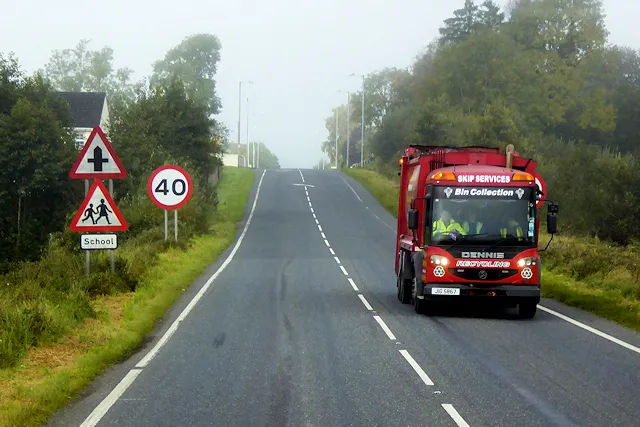
Photo: David Dixon , CC BY-SA 2.0, via Wikimedia Commons
Bin day has a rhythm all of its own. Long before the school run, the dog walkers and the first Deliveroo rider, there is the low rumble of a lorry, the clatter of wheelie bins and a brief, oddly sociable moment when half the street appears in dressing gowns and slippers. It is not glamorous. It is not Instagram-friendly. But it might just be the most honest social event on the British calendar.
“You can tell a lot about a street by its kerbside,” says Dave, a loader in his fifties who has been on the same round for eleven years. “New baby? You’ll see the nappy sacks. Someone’s had a clear-out? There’s a wardrobe and a note saying ‘free to a good home’. Someone’s had a row? There’s a smashed plate in the recycling and nobody’s talking at the gate.”
He pauses, then adds: “We’re not spies. But we do notice.”
That seems to be the unofficial motto of Britain’s refuse crews. They are part delivery service, part early-morning theatre, part rolling census of the neighbourhood. And in 2026, as more of us work from home or order everything online, bin day remains one of the few moments when a street is briefly, genuinely communal.
The rolling census of a British street
Ask a bin crew what they know about a road and the answers come thick and fast. They know which houses put their bins out the night before and which ones sprint down the path in a panic at 7:02. They know who recycles diligently, who shoves everything in one bag and hopes for the best, and who has been meaning to order a new food caddy since roughly the last century.
“You get a feel for people,” says Aisha, a driver from a depot in the Midlands. “There’s the house that always waves. The house that never puts the right bin out. The house that leaves a little box of chocolates at Christmas. And the house that leaves a note saying ‘sorry about the glitter’ — which, honestly, is the most useful warning you can get.”
Glitter, it turns out, is a recurring menace. So is flour, loose cat litter and the occasional bag of wallpaper paste. One crew recalls a mannequin in a wedding dress propped against a wall at 6am. Another remembers a full set of encyclopaedias with a handwritten label: “Sorry. They were my dad’s.” A third once found a karaoke machine, one microphone and a note that simply read: “No shame. It’s your problem now.”
The weird, the wonderful and the wildly optimistic
Bin crews have seen things that would make a car boot sale blush. Taxidermy foxes. A single shoe balanced on top of a bin like modern art. A six-foot cardboard cut-out of a soap star. A garden gnome with a bandaged leg. And, on one memorable occasion, a full china tea set arranged on the pavement with a sign saying “Help yourself — I’m moving in with Dave.”
“You learn not to judge,” says Dave. “People are doing their best. Sometimes their best is three bin bags, a broken ironing board and a note saying ‘sorry’. You just take it and move on.”
What surprises the crews most, though, is not the odd rubbish. It is the kindness. Handwritten thank-you notes taped to bin lids. Kids’ drawings of the lorry stuck to the side of a recycling box. A tray of teas left on a wall with a note: “For the bin men — milk and sugar already in.”
“That’s the best cup of tea on the round,” says Aisha. “Not because it’s fancy. Because someone thought about it. We don’t ask for it. We’d never ask. But when it’s there, it changes your morning.”
The kettle index
The unofficial tea rankings are fiercely debated. A decent cup must be hot, strong enough to stand a spoon in, and handed over with a bit of chat. “If someone comes out and says ‘you look frozen, love, hang on’, that’s a five-star stop,” says Dave. “If they bring out a plate of biscuits, that’s Michelin.”
The best stops tend to be on cul-de-sacs, where the lorry has to turn around and there is a natural pause. One crew has a regular who puts out a flask and a stack of mugs on a garden wall every fortnight. Another has a retired nurse who insists on checking their hands for cracks in the cold weather. “She gave me a tube of hand cream once,” says Aisha. “I nearly cried.”
Rules of the kerb
For all the warmth, there are rules. Bin crews have a gentle plea list for the nation: put the right bin out, face the handles towards the road, don’t chase the lorry down the street in your pyjamas, and please, please do not put loose glitter in the recycling.
“We’re not trying to be jobsworths,” says Dave. “But if a bin is overflowing or the wrong stuff is in it, we can’t take it. And then people think we’re being difficult. We’re not. We’re just trying to get round 1,200 houses before lunch.”
Christmas is, predictably, chaos. The crews know which streets will have extra bags, which houses will leave out a crate of mince pies, and which cul-de-sac will accidentally create a cardboard mountain that blocks the whole road. “We see the best of people at Christmas,” says Aisha. “And the most cardboard.”
The last unglamorous social network
Bin day will never trend on social media. Nobody is filming a TikTok of their food waste caddy. But that is exactly why it matters. It is a small, recurring, deeply British ritual — a knock on the door, a wave from the lorry, a note on a bin lid, a kettle boiled for someone who spends their morning lifting other people’s rubbish.
“People think we just take the bins,” says Dave. “But we’re part of the street. We see the seasons change. We see the kids grow up. We see who’s moved in and who’s moved out. It’s a proper job, with proper people. And most mornings, it’s a proper laugh.”
So next time the lorry rumbles past at an ungodly hour, do them a favour. Put the bin out the night before. Face the handles the right way. And if you’re feeling generous, put the kettle on. It might just be the best cup of tea on the round.