The Most Important Wave in Britain Happens at 8:35am
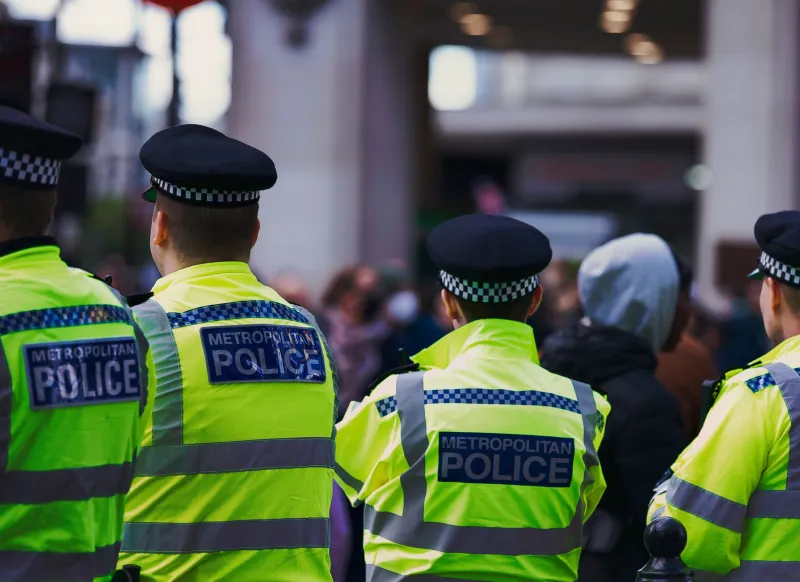
It is 7:52am and the sky over the ring road is the colour of wet cardboard. A woman in a fluorescent yellow coat is standing beside a zebra crossing, holding a round sign on a stick, and absolutely owning the pavement. She is not rushing. She is not scrolling. She is watching the traffic like a goalkeeper who has done this a thousand times and still expects a shot.
This is the morning shift of Britain’s school crossing patrols — the lollipop people, the kerb-side mayors, the humans who make the school run slightly less chaotic and considerably more social. In 2026, with school streets, 20mph zones and enough traffic apps to make your phone sweat, you might think the job has shrunk. It hasn’t. It has just got quieter, colder and, in its own way, more important.
The arm that says more than words
“You can tell a lot from the arm,” says Jean, who has patrolled the same crossing on the edge of Leeds for eleven years. “There’s the normal stop — firm, polite, no drama. Then there’s the stop for the white van who thinks the sign is decorative. That one comes with a look. And then there’s the wave for the kids who are running late. That one says, ‘I’ve seen you, keep coming, I’ll hold them.’”
The perfect wave, it turns out, is a genuine skill. Too big and you look like you’re flagging down a ferry. Too small and the child at the back thinks you’ve forgotten them. The best patrols have a wave that is part traffic signal, part hug. It is the sort of thing you cannot teach in a classroom, which is probably why most of them learned it from someone else on the same kerb.
“I took over from a woman called Pam,” says Marcus, a patrol in south London. “She told me three things: stand where they can see you, never assume a car has seen the sign, and learn the kids’ names before you learn the drivers’ faces. I still hear her voice when it’s raining sideways.”
What the kids actually say
If you want to know what is happening in a neighbourhood, do not read the parish newsletter. Stand by a primary school gate for twenty minutes in November. The crossing patrol gets the unfiltered feed.
“I’ve had dinosaurs, divorce, dead hamsters, Pokémon cards, the entire plot of a film I’ve never seen and a very detailed explanation of why one boy’s nan makes the best toast,” says Denise, who patrols in a village outside Norwich. “They tell you everything. You are a moving confessional with a high-vis jacket.”
There are the regulars who greet you like a returning hero, the Year 6 children who have decided they are too cool for the wave but still nod, and the reception kids who treat the crossing like a red-carpet moment. One patrol in Sheffield describes a five-year-old who insists on giving her a weekly update on his snail. “The snail is called Brian. Brian has had a busy autumn.”
And then there are the quiet ones. The child who walks slightly behind the parent, hood up, saying nothing. The patrols notice them too. “You don’t force it,” says Jean. “You just say good morning and leave the door open. Some of them come round by the time they’re nine. Some of them just need to know you’re there.”
The drivers who don’t stop
It would be lovely to report that every driver behaves. It would also be a lie. The patrols I spoke to had a shared list of gripes: the driver who speeds up to beat the sign, the one who waves an apology while continuing to roll forward, the one who treats a zebra crossing like a personal slalom course.
“Most people are fine,” says Marcus. “Genuinely. But the ones who aren’t stick with you. I had a bloke shout at me because I made him late for a meeting. I said, ‘Mate, I’m making sure a seven-year-old gets to school alive. Your meeting will keep.’ He didn’t like that.”
The job has also become more visible. Body cameras are not standard, but several councils have trialled them. Local authorities in 2026 are more likely to talk about “vulnerable road users” and “school street enforcement” than they were a decade ago. The patrols themselves are less interested in the jargon. They want drivers to slow down, look up and treat the lollipop sign like a red light, not a suggestion.
“It’s not about being bossy,” says Denise. “It’s about the fact that I’ve got a five-year-old on one side and a delivery van on the other. I’m not asking for much. Just stop for fifteen seconds. You can still get your coffee.”
Dressed for the dark
The uniform has changed, but not as much as you’d think. The fluorescent coat is still the star. Underneath, the patrols have their own systems: thermal leggings, waterproof trousers, two pairs of gloves, a hat that has been lost and found three times, and a flask that is treated with the reverence of a family heirloom.
“Hand warmers are the real heroes,” says Jean. “I’ve got the reusable ones. They go in the pockets and they stay warm until about half eight. By then the kids have arrived and the feeling has come back into my fingers.”
Marcus swears by a decent pair of waterproof over-trousers. “You look ridiculous. You feel invincible. That’s the trade-off.” Denise has a policy of never wearing a scarf that dangles. “Nothing that can be grabbed or caught. You learn that pretty quick.”
And then there is the sign itself. The lollipop. It gets cleaned, checked and, in some cases, decorated for Christmas. One patrol in Lancashire has a small Santa hat that goes on the top of the pole in December. The children expect it. The drivers pretend not to notice.
More than a crossing
The longer you talk to crossing patrols, the clearer it becomes that the road is only half the job. They are part of the neighbourhood’s early-warning system. They know when a family has moved in, when a child is struggling, when a parent has gone back to work and a grandparent has taken over the school run. They are not social workers. They are not spies. They are just there, every morning, in the same spot.
“People underestimate how social it is,” says Denise. “I know the dog walkers, the bin men, the bloke who opens the shop. I know who’s had a baby and who’s moved away. It’s a proper little community, and I get to stand in the middle of it.”
In 2026, with more parents working from home and more schools pushing walking buses, the patrols are adapting. Some are busier than ever. Some crossings have been lost to budget cuts. The ones who remain are fiercely proud of the job, even when their fingers are numb and a driver has just mouthed something unprintable through the windscreen.
“I’ll tell you what it is,” says Jean, adjusting her hat. “It’s the wave back. You stop the traffic, the kid crosses, and just before they run into the playground they turn round and wave. Every time. That’s the whole job in one gesture.”
So next time you’re stuck behind a lollipop sign on a dark November morning, don’t sigh. Don’t lean on the horn. Just watch the arm go up, the kids cross, and the small, ordinary miracle of a street briefly behaving itself. Then wave back. It costs nothing and it means more than you’d think.