The High-Vis Mayor of the Morning: Britain's School Crossing Patrollers on Rain, Gossip and the 8:40 Dash
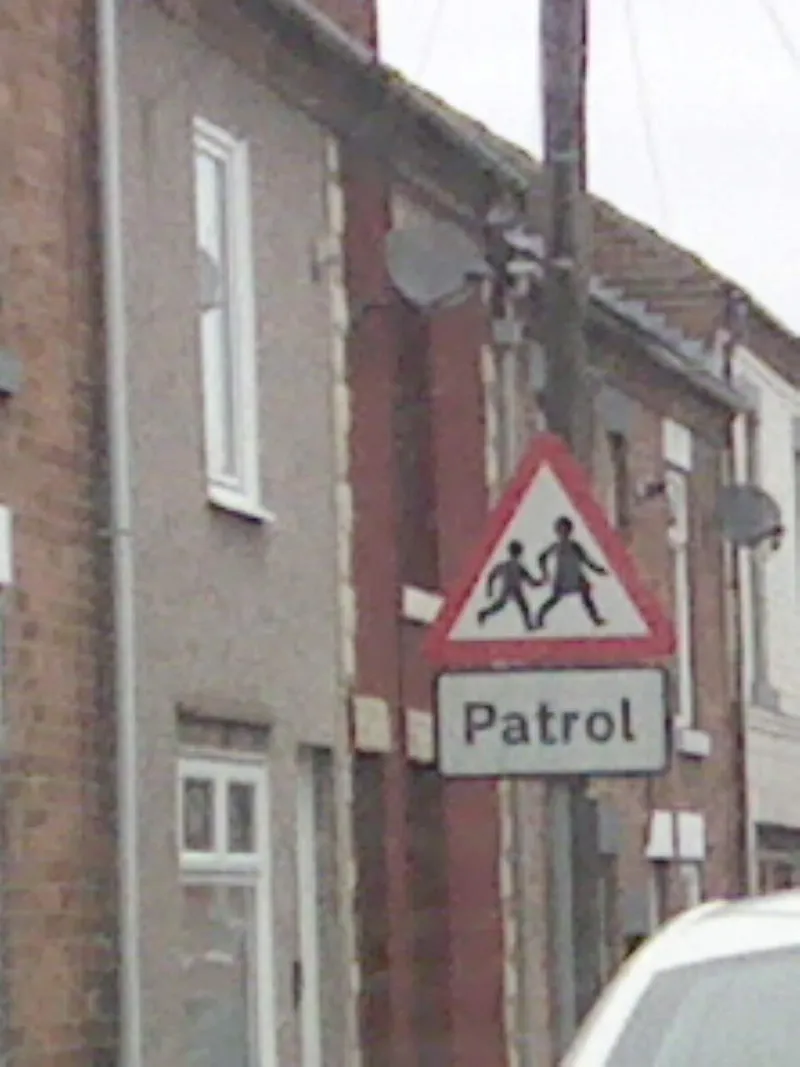
Photo: Gary , CC BY-SA 2.0, via Wikimedia Commons
At 8:32 on a wet Tuesday in November, the most powerful person in town is wearing a fluorescent yellow coat and holding a large plastic circle. The traffic stops. The parents stop. Even the dog with the squeaky ball stops. For twenty minutes, the school crossing patroller runs the busiest junction in the neighbourhood, and everyone — from the headteacher to the bloke in the white van — does as they are told.
We tend to call them lollipop ladies, though plenty are lollipop gentlemen now, and the proper title is school crossing patroller. Whatever you call them, they are the high-vis mayors of the morning: part traffic management, part therapist, part intelligence service. They know which child has lost a tooth, which parent is running late, which dog is friendly and which rumour is doing the rounds before the first bell has even rung.
The boss of twenty minutes
'People think it's just standing in the road,' says Denise, who has patrolled a junction outside a primary school in Leeds for eleven years. 'It's not. It's a production. You've got the early wave, the buggy wave, the frantic wave and the late wave. And every wave has its own rules.'
Denise knows the names of roughly two hundred children. She knows which ones need a hand with a zip, which ones will try to cross without looking, and which ones are quietly having a tough time at home. She is not a teacher, a social worker or a traffic cop. But some mornings she is a bit of all three, standing in the rain with a stop sign and a pocket full of dog biscuits.
The job is officially about road safety. Unofficially, it is about the small, ordinary glue that holds a street together. 'You see the same faces every day,' says Denise. 'You notice when someone's not there. You notice when someone's got a new coat, or a new baby, or a face like thunder. You can't help it. You're part of the morning.'
Rain, rumours and the school-gate intelligence network
If you want to know what is really happening in a British town, forget the parish council newsletter. Stand at a crossing on a wet Monday. The patroller will have the lot: which road is closed, which supermarket has run out of bread, whose extension is finally finished and why the bin lorry was late.
'I hear everything twice,' says Marcus, who covers a crossing near a secondary school in Bristol. 'Once from the kids, once from the parents. The kids' version is usually more accurate and a lot more entertaining.'
He has been told about playground break-ups, surprise pets, mysterious bruises that turned out to be jam, and a hamster that allegedly escaped into the science block. 'You learn not to repeat things,' he says. 'But you do learn to listen. Some of them just want someone to say good morning and mean it.'
The weather is the great leveller. In July, the crossing is a sun-trap and a social club. In January, it is a wind tunnel with a lollipop. Patrollers develop their own forecasting system: the colour of the sky, the direction of the rain, the number of parents who have abandoned the umbrella and gone for the hood-up sprint.
The polite stare and the near-miss economy
Every patroller has a near-miss story. Usually it involves a driver on the phone, a cyclist without lights, or a parent late for work who thinks the rules apply to everyone except them.
'I've got a look,' says Sandra, who has worked a crossing in Norfolk for six years. 'I don't shout. I just hold the sign and stare. It's the stare of a woman who has seen your child's packed lunch and knows you forgot the fruit again.'
The near-misses are the part of the job nobody puts on the recruitment poster. Patrollers are trained to be cautious, to wait for the traffic to actually stop, to make eye contact with drivers. But they are also human, and humans have to trust strangers every morning. That trust is the whole point of the lollipop: a small, daily agreement that we will look after each other on the way to school.
Small kindnesses, soggy gloves and the lollipop legacy
What stays with patrollers is rarely the drama. It is the small stuff. The child who brings a drawing. The teenager who says thank you three years after leaving primary school. The parent who drops off a coffee on the coldest morning of the year. The dog that sits patiently at the kerb because it knows the routine better than most adults.
'You get a lot of waves,' says Marcus. 'Not the big dramatic ones. Just a hand up from a car, a nod from a cyclist, a kid shouting your name across the road. It sounds small. But it's not. It's the whole job.'
There is a quiet sadness to it too. Patrollers see the seasons of a childhood pass in fast-forward. The reception children who need a hand to cross become the year sixes who cross themselves. Then they are gone, replaced by a new set of tiny coats and enormous backpacks. The patroller stays. The lollipop stays. The morning stays.
Why twenty minutes can hold a whole town together
Britain has thousands of school crossing patrollers, many of them part-time, many of them retired, nearly all of them underpaid and over-fluorescent. They are not celebrities in the usual sense. They do not have agents or Instagram accounts. But in their own twenty-metre stretch of road, they are the most recognisable face of the day.
So next time you are stuck behind a lollipop sign at 8:45, waiting for a crocodile of small people to cross, remember this: you are not stuck. You are part of the morning ritual. The high-vis mayor has seen everything — the rain, the rumours, the rush and the kindness. And she is still there, holding the sign, keeping the town together one crossing at a time.