Bags, Bargains and the Back-Room Parliament
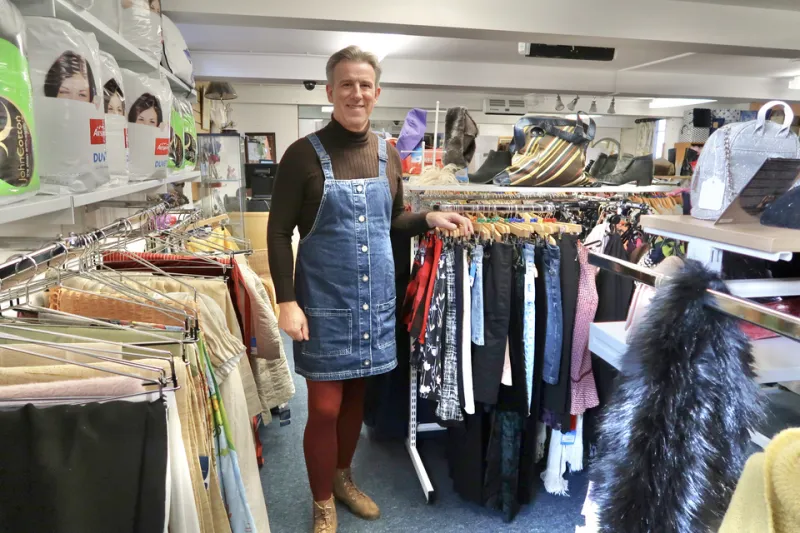
Photo: AntonDubeke1000, CC0, via Wikimedia Commons
The front of a charity shop is all cheerful order: rails by colour, books by genre, a suspiciously tidy shelf of jigsaws. The back room is where the town takes its coat off. I spent three mornings this November in charity shop back rooms in Leeds, Leicester, Plymouth and Glasgow, and learned that the real business of a British charity shop is not retail. It is listening.
Names have been changed, because charity shop volunteers know everything and prefer to keep it that way.
The Bag Is the Story
In Leeds, Maureen has been volunteering for eleven years. She can tell you more about a street from its donation bags than any council survey. 'You can read a house in a bag,' she says, unfolding a cardboard box. 'One had a single ice skate, a tin of Quality Street and a note saying sorry. Another had forty-five tea towels, all ironed. Forty-five. You don't iron forty-five tea towels unless something has happened.'
The back room is a sorting room, a confessional and a lost property office for the soul. Volunteers find wedding dresses with notes pinned to them, boxes of bus timetables from the 1980s, a taxidermy fox that nobody would price, and an entire VHS collection of local pantomimes. One bag in Leicester contained a jar of buttons and a receipt from 1994. Dev, who has worked there for six years, says the receipts are the most intimate. 'People donate the paper trail of their lives,' he says. 'Then they buy a paperback for 50p and walk out lighter.'
Pricing Is an Art, Not a Science
There is no manual for pricing a ceramic owl with one eye. Volunteers develop instincts. Dev calls it 'forensic guesswork'. Maureen calls it 'knowing what a thing is worth to the person who wants it, not the person who had it.' A Wedgwood plate might sit for weeks at £4; a chipped teapot with a hand-painted hen goes in an hour at £2.50. The pricing table is where generosity meets realism. Designer labels get checked, fake labels get quietly ignored, and anything that smells strongly of someone else's house gets a spray and a window ledge.
The trickiest items are the ones with no clear category. A boxed set of knitting patterns. A single curtain. A brass thing that might be a door knocker or might be a medical instrument. These go to 'the committee', which is less a committee and more whoever is nearest the kettle. The decision is usually made within four minutes and is almost never revisited.
The Window Display Is Local Politics
Every charity shop has a window-display committee, even when it doesn't. In Plymouth, Elaine and another volunteer once had a fortnight-long standoff over whether tinsel was allowed in October. 'I wanted a tasteful autumn palette,' Elaine says. 'She wanted Christmas. We compromised with a pumpkin wearing a Santa hat. It sold.'
Window displays are judged by everyone: the regulars, the neighbouring café, the woman who comes in every Tuesday to check whether the mannequin has been dressed 'properly'. A good display can double sales of a particular shelf. A bad one can cause a quiet but lasting feud over who put the charity teddy in the middle of the poppy display. Volunteers learn to read the street. If the school run is late, the shop is quiet. If it is raining, the shop is full. If the local football team has lost, nobody wants to talk about it, but everybody wants a browse.
The Kettle Is the Committee
The back-room kettle is the actual chair of proceedings. It decides when the sorting stops, when the gossip starts and who is owed a biscuit. In Glasgow, Sam says the kettle is the reason people stay. 'You can volunteer for the company and accidentally sort a hundred coats,' she says. 'The kettle doesn't judge. It just boils.'
Tea breaks are where the shop's real intelligence is shared. Who is moving house. Which pub is changing hands. Why the council has put a cone outside the pharmacy for three weeks. The volunteers hear more than the postman, the hairdresser and the vicar combined, but they are discreet in a way that makes the discretion feel like a public service. They will tell you the bag of carrots in the donations was probably from the man at number 12. They will not tell you why.
Regulars, Roasts and the Town's Confessional
Then there are the regulars. Ron, 78, comes into the Leeds shop most mornings for a chat and a 50p paperback. He has not read most of them. 'He's not buying books,' Maureen says. 'He's buying company.' The shop knows his birthday. The shop knows he likes the corner chair. The shop knows when he is having a bad week, because he brings in a bag of things he doesn't need to donate.
That is the quiet brilliance of the charity shop back room. It is not just a place where things are sorted. It is a place where people are sorted, too. The volunteers are the first to see what a town is letting go of, and the last to make a fuss about it. They price the past, steam the creases out of it, and put it on a rail for someone else to love.
The kettle knows first. It always does.